
Choosing the right bracelet material for everyday wear can feel confusing — especially when brands talk about tech specs, not real life.
If you’ve ever wondered whether titanium or stainless steel feels better, lasts longer, or looks sharper on the wrist every day, you’re in the right place.
Why Bracelet Material Matters for Everyday Wear
When people buy a bracelet, most focus on how it looks on day one. But everyday wear quickly exposes the real difference between materials.
Think about your typical day:
- Sweating during travel
- Typing on a desk for hours
- Occasional bumps against tables
- Washing hands multiple times
A bracelet that looks great in photos can feel annoying — or even start looking dull — within weeks if the material isn’t good. And it’s not just about looks — many buyers now ask: what about health?
When comparing Titanium vs Stainless Steel Bracelets, people increasingly want to know which material is better for their skin and daily wellness — because today, accessories are about style + comfort + skin safety, not just appearance.
This is exactly where the Titanium vs Stainless Steel Bracelets comparision becomes important.
What “Everyday Wear” Really Means
In real life, an everyday bracelet must handle more than just style.
It should comfortably survive:
- Daily sweat and humidity
- Long office hours on the keyboard
- Weekend outings and travel
- Minor scratches and knocks
From what many accessory buyers experience (and what we’ve seen while styling customers), comfort and durability start mattering more after the first few weeks — not on day one.
That’s why material choice isn’t just technical — it’s practical.
The 3 Biggest Concerns Buyers Usually Have
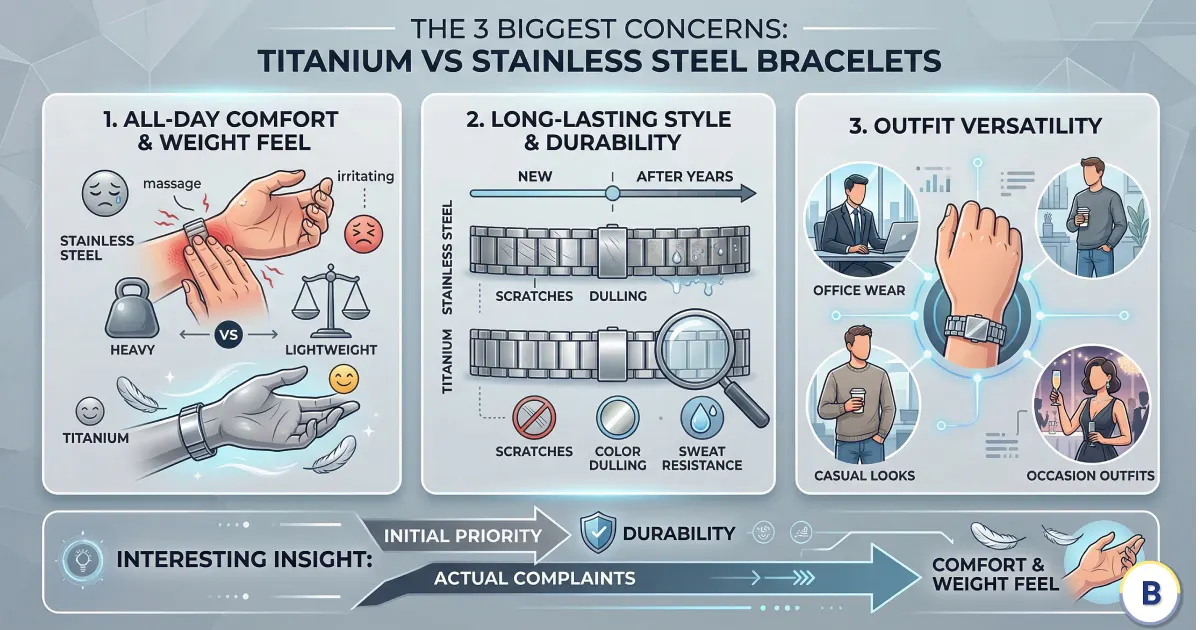
When someone compares Titanium vs Stainless Steel Bracelets, the same questions keep coming up.
1. Will it feel comfortable all day?
- Heavy bracelets can start feeling irritating after long hours
- Lightweight ones sometimes feel “too light” for some users
2. Will it last without looking old?
- Scratches
- Color dulling
- Sweat resistance
3. Will it match most outfits?
- Office wear
- Casual looks
- Occasion outfits
Interesting insight: Many first-time buyers think durability is their top priority.
But after purchase, most complaints actually come from comfort and weight feel.
How Most Buyers See Titanium vs Stainless Steel
Before people even check specs, they usually form an opinion just by look and feel.
In the Titanium vs Stainless Steel Bracelets comparison, buyer perception plays a bigger role than most brands realize.
From what we’ve consistently noticed while observing customer choices, here’s the typical mindset:
Titanium is commonly perceived as (Style + Wellness focus):
- Lightweight and comfortable for long wear
- Modern, minimal, and slightly premium
- Hypoallergenic and safer for sensitive skin
- Ideal for buyers who care about style + wellness together
- Subtle rather than attention-grabbing
Stainless steel is usually perceived as:
- Strong, solid, and dependable
- Heavier with a more “noticeable” wrist presence
- Available in more shiny and bold finishes
- Better value for money for many first-time buyers
Reality check: Many buyers initially choose based on feel and look, but after a few weeks of everyday wear, comfort and skin behavior often become the deciding factors.
And that’s exactly why understanding the real-world difference between titanium and stainless steel matters — which we’ll break down next.
Titanium Bracelets — Pros & Cons
If you’ve ever worn a bracelet that started feeling heavy by evening, titanium immediately feels different.
In the Titanium vs Stainless Steel Bracelets debate, titanium usually wins on comfort — but that doesn’t mean it’s perfect for everyone.
Let’s break it down from a real everyday-wear perspective.
What Titanium give
1. Extremely Lightweight (Big comfort win)
Titanium is roughly 40–45% lighter than stainless steel.
Because of this, many people prefer titanium bracelets when they want something comfortable enough to wear all day without noticing the weight on their wrist.
In real usage:
- You barely feel it during long work hours
- No wrist fatigue while typing
- Great for people who remove heavy accessories mid-day
👉 From customer behavior we’ve observed:
Many first-time bracelet buyers think they want a “solid heavy feel”… but later switch to titanium because comfort starts mattering more than weight.
2. Hypoallergenic — Safer for Skin & Daily Wellness
One of titanium’s biggest everyday advantages — and a major reason it fits the style + wellness trend.
- Very low risk of skin irritation
- No nickel reaction issues
- Better for humid Indian weather and sweating
- Comfortable for long-hour wear
This is especially helpful if:
- Your skin reacts to metal watches
- You sweat heavily during commute
- You wear bracelets all day
Real-world note: Skin sensitivity complaints are far more common with steel than titanium, which is why wellness-conscious buyers often prefer titanium.
3. Strong Natural Corrosion Resistance
Titanium handles moisture extremely well.
That means:
- Sweat doesn’t easily damage it
- Humidity exposure is less risky
- Good for daily wear without constant worry
For Indian climates (especially summer months), this becomes a practical advantage.
4. Clean, Minimal Premium Look
Titanium bracelets usually have a more understated, matte-style appeal.
They work best with:
- Minimal outfits
- Smart casual looks
- Modern streetwear styling
Brand insight: People who prefer subtle luxury over flashy shine often lean toward titanium.
Common Titanium Drawbacks
Titanium isn’t perfect — and this is where many buyers get surprised.
1. Usually More Expensive
Titanium processing is harder, so prices tend to be higher than stainless steel.
For budget-conscious buyers, this can be a deciding factor — especially for first-time accessory purchases.
2. Can Show Surface Marks Over Time
Here’s a nuance many blogs miss.
While titanium is strong, it is not always the most scratch-resistant in daily friction.
In real life:
- Light surface marks may appear with rough use
- Polished titanium can show wear sooner than expected
That said, many users actually like the slightly worn-in matte character over time.
3. Limited Finish Variety
Compared to steel, titanium usually comes in:
- Matte
- Brushed
- Subtle finishes
You’ll see fewer:
- High-gloss mirror styles
- Heavy shine looks
- Decorative textures
👉 What this means practically:
If you love bold, shiny wrist presence, titanium may feel too understated.
✅ Quick takeaway:
Titanium shines when your priority is comfort, skin safety, and lightweight everyday wear — but it may not satisfy buyers who want a heavy, flashy wrist feel.
Titanium vs Stainless Steel Bracelets: Quick Comparison
After understanding both materials individually, the real question becomes simpler:
Which one actually performs better in everyday life?
Instead of just specs, it helps to compare them across the factors that matter most for daily wear.
Weight & Comfort
Titanium
- Around 40–45% lighter than stainless steel
- Feels barely noticeable on the wrist
- Ideal for long office hours, travel, or commuting
Stainless Steel
- Heavier and more solid feel
- Many buyers initially prefer the weight
- Can feel slightly bulky after long wear
👉 Real observation:
People who wear bracelets all day often prefer titanium.
Those who wear them occasionally tend to enjoy steel’s solid feel.
Durability in Daily Use
Titanium
- Strong and corrosion-resistant
- Handles sweat and humidity very well
- May develop light surface marks over time
Stainless Steel
- Better resistance to surface scratches
- Handles desk friction and bumps well
- Maintains polish longer with rough use
👉 If your bracelet regularly hits desks or hard surfaces, steel can age better visually.
Skin Comfort & Wellness
This is where titanium usually stands out in the Titanium vs Stainless Steel Bracelets comparison.
Titanium
- Hypoallergenic
- Very low risk of skin irritation
- Better for people with sensitive skin
Stainless Steel
- Generally safe for most people
- Some alloys contain nickel which may cause irritation for sensitive users. Dermatologists often mention nickel as one of the most common causes of jewelry-related skin reactions
Because of this, many buyers today consider titanium part of a style + wellness choice, not just fashion.
Style & Appearance
Titanium
- Minimal and understated look
- Often matte or brushed finish
- Works well with modern, subtle styling
Stainless Steel
- More shine and visual presence
- Available in polished, matte, and textured styles
- Greater variety of bracelet designs
👉 If you like bold accessories, steel usually offers more options.
Price & Value
Titanium
- Usually more expensive due to complex manufacturing
- Often positioned as a premium material
Stainless Steel
- More affordable and widely available
- Great value for first-time bracelet buyers
Quick Comparison Table
| Feature | Titanium | Stainless Steel |
|---|---|---|
| Weight | Very lightweight | Heavier |
| Comfort | Excellent for long wear | Good but noticeable |
| Scratch Resistance | Moderate | Strong |
| Skin Safety | Hypoallergenic | May irritate sensitive skin |
| Style Variety | Limited | Wide variety |
| Price | Higher | More affordable |
✅ Simple takeaway:
Choose titanium if you want comfort, skin safety, and lightweight everyday wear.
Choose stainless steel if you want durability, heavier wrist presence, and more style options.
How to Choose the Right Bracelet for Your Lifestyle
When comparing Titanium vs Stainless Steel Bracelets, the best choice isn’t just about specs — it’s about how you actually live and wear accessories every day.
A bracelet that works perfectly for one person may feel uncomfortable or impractical for another.
Here’s a simple way to decide based on your daily routine and style preferences.
If You Wear Your Bracelet All Day
If you plan to wear your bracelet from morning to night — at work, while commuting, and during casual outings — comfort becomes the most important factor.
In this case, titanium often feels better for everyday wear.
Why?
- Much lighter on the wrist
- Less noticeable during long hours
- Lower risk of skin irritation from sweat
👉 Many daily bracelet wearers eventually realize that lighter accessories simply feel easier to live with.
If You Prefer a Strong Wrist Presence
Some people want their bracelet to feel solid and visible, not subtle.
If that sounds like you, stainless steel may be the better choice.
Steel works well when you want:
- A heavier, premium feel
- A bracelet that stands out more visually
- Bold or polished designs
For many first-time buyers, the weight of stainless steel creates a sense of durability and value.
If You Have Sensitive Skin
Skin comfort is something buyers often realize after they start wearing a bracelet regularly.
If you have experienced:
- Skin irritation from watches
- Redness under metal accessories
- Discomfort in humid weather
Then titanium bracelets are usually the safer option.
Because titanium is naturally hypoallergenic, it aligns well with the growing idea of style + wellness in accessories.In fact, titanium is widely used in medical applications because of its strong biocompatibility and corrosion resistance.
Some people also extend this idea of style + wellness by wearing gemstone accessories like a 7 Chakra bracelet alongside their everyday bracelets.
If Style Variety Matters Most
Some buyers enjoy having multiple bracelet styles to match different outfits.
In that case, stainless steel offers more variety.
You’ll find:
- Polished mirror finishes
- Matte textures
- Chunky statement designs
- More decorative styles
Titanium designs tend to stay minimal and understated.
A Simple Rule That Helps Most Buyers
If you’re still unsure, this quick guideline helps:
Choose Titanium if you want lightweight comfort and skin-friendly wear
Choose Stainless Steel if you want durability, weight, and more design options
Both materials can work well for everyday use — it simply depends on what matters most to you: comfort or presence.
Final Verdict: Titanium vs Stainless Steel Bracelets
When it comes to Titanium vs Stainless Steel Bracelets, there isn’t a single “perfect” material for everyone. The right choice depends on how you wear your bracelet and what you value most in everyday accessories.
If your priority is comfort, skin safety, and lightweight wear, titanium is usually the better fit. Many people who wear bracelets all day — especially in warm climates or long work hours — appreciate how barely noticeable titanium feels on the wrist.
On the other hand, if you prefer a bracelet that feels solid, durable, and visually bold, stainless steel remains a reliable choice. Its heavier feel and wider range of finishes make it popular among buyers who want their accessories to stand out more as a style statement.
Another factor many modern buyers consider today is the balance between style and wellness. Accessories are no longer just about appearance — they’re also about how comfortable and skin-friendly they feel during daily wear. In that sense, titanium often appeals to people who want both clean minimal style and long-term comfort.
The simplest way to decide:
Choose Titanium if you want lightweight comfort and hypoallergenic wear
Choose Stainless Steel if you want durability, heavier feel, and more style variety
Both materials can work well for everyday bracelets. The best choice is simply the one that fits your lifestyle, comfort preferences, and personal style the most.