
Quick answer: Two to four weeks of real daily wear is the minimum before you can honestly call it. Most people notice nothing, which is the more common outcome. The 2013 randomized trial is pretty clear on that. But a genuine placebo response still counts as a real response for whoever’s having it, and most articles just skip that part entirely.
Got a message last month. Ten days into wearing a copper bracelet for finger joint stiffness, this person was half-convinced she was imagining things. Her mornings had been slightly easier. She didn’t want to give the bracelet credit for it, but she couldn’t explain it away either.
She wasn’t asking for validation. Just honest information, without a product link attached to every sentence.
Here’s what actually happens when you wear a copper bracelet for arthritis. The research first, then the Ayurvedic angle most articles completely skip, then a realistic week-by-week picture of what people actually report.
First, There Are Two Very Different Kinds of Copper Bracelet
This distinction gets missed constantly, and it matters. “Copper bracelet” covers at least two products built on completely different reasoning.
A pure copper kada is solid copper. Nothing else. The tradition here is Ayurvedic: copper has long been thought to balance what’s called Vata imbalances, which roughly maps to joint stiffness and dryness. People wore copper kadas for this reason long before the Western wellness market discovered the concept.
A copper magnetic bracelet is a different thing. Copper plus embedded magnets, adding a separate claimed benefit around circulation near the joint. Usually open-cuff, magnets flush into each end.
Most published research bundles both under “copper bracelet” without separating them. Worth keeping in mind, since which one you’re wearing changes which claimed mechanism actually applies.
What the Research Found on Copper Bracelets and Arthritis Pain
Best data on this comes from a study published on PMC in 2013. Proper double-blind, placebo-controlled, crossover design: seventy people with rheumatoid arthritis, each wearing different devices in rotation for five-week stretches. Copper bracelet included.
Result for copper: no meaningful therapeutic effect beyond placebo.
The Cleveland Clinic lands in the same place: no known medical mechanism by which a copper bracelet alters pain pathways. Though they do acknowledge the placebo effect produces genuine perceived relief for some people, which is at least honest.
Worth knowing: That PMC study was specifically rheumatoid arthritis. Much less formal data exists for osteoarthritis or general joint pain. People wear copper bracelets for all of it, but the evidence base for non-RA uses is thin.
The Ayurvedic Angle Most Articles Completely Skip
Copper isn’t a new wellness trend. It’s been part of Ayurvedic practice for centuries, through copper water vessels, cooking vessels, and kadas worn daily on the wrist.
The Ayurvedic reasoning: trace copper absorbed through skin contact can help balance Vata, which governs joint movement and flexibility in that framework. Not a pharmacological claim. But it’s the reason a copper kada carries genuine cultural weight for a lot of people, separate from what any trial finds.
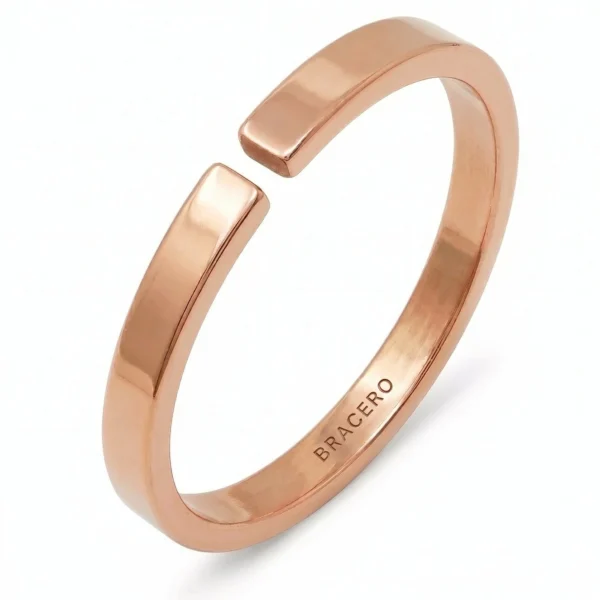
Bracero’s pure copper kada is 99.99% solid copper, Nepaliya flat style, no coating of any kind. Fully adjustable. At ₹570, it’s about as close to the traditional piece as you’ll find.
Copper Bracelet for Arthritis: Week by Week, What to Actually Expect
Here’s the rough picture, pieced together from what people commonly report.
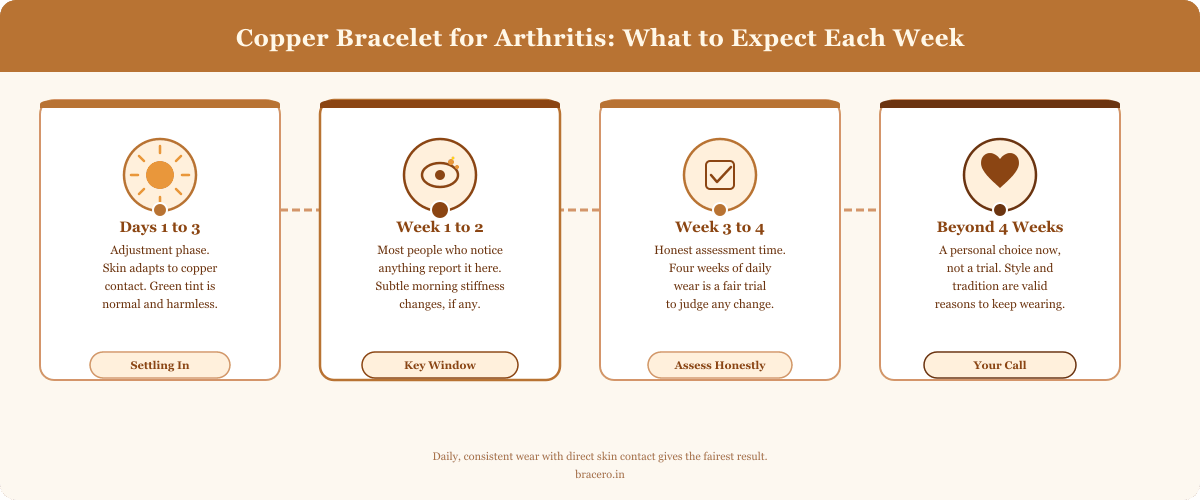
Days 1 to 3: Mostly just adjustment. Skin getting used to copper contact all day. A few people notice faint warmth near the wrist. Some notice their skin turning greenish underneath. That green is copper oxide forming from contact with sweat and skin oils. Completely harmless, and actually means the copper is touching skin properly.
Week 1 to 2: This is when most people who notice anything say it happened. Usually morning stiffness in the fingers or wrist, a bit less pronounced. Plenty of others feel nothing at all. Both are normal outcomes at this stage.
Week 3 to 4: Honest-assessment time. Four weeks of daily wear is enough to give it a real shot. Nothing shifted by then? Research says continued wear alone isn’t likely to change that.
Beyond four weeks: Some keep wearing it anyway. Not as a test anymore. Just because they like how it looks, or it connects to something personal or cultural. That’s a completely different thing from a therapeutic trial, and also a perfectly valid reason to keep wearing jewelry.
How to Wear It Properly
Two things come up consistently when you look at people who got any result at all.
Skin contact, the whole day. If copper isn’t touching skin, the absorption premise doesn’t apply. A loose bracelet, or one worn over a sleeve, is just decorative at that point. Wear it snug, take it off only for washing. That’s genuinely it.
Give it its own wrist. Stacking it with four other bracelets cuts the contact surface and muddies whatever you’re trying to track. First two weeks: let it sit alone. If you want to eventually layer it with other pieces, this guide on how to match a bracelet is worth a read before you do.
What to Look for Before You Buy
A few things matter more than whatever the listing headline says.
First: check it’s genuinely copper. Not copper-coloured. Plated pieces look identical, but the base metal underneath is different, so the skin contact premise is different. “99.99% pure copper” or “solid copper” somewhere in the specs is what you’re after.
For arthritis specifically, ease of getting it on and off matters more than it does with regular jewelry. Fingers are stiff in the morning. An open-cuff that bends slightly is much more practical than anything with a clasp.
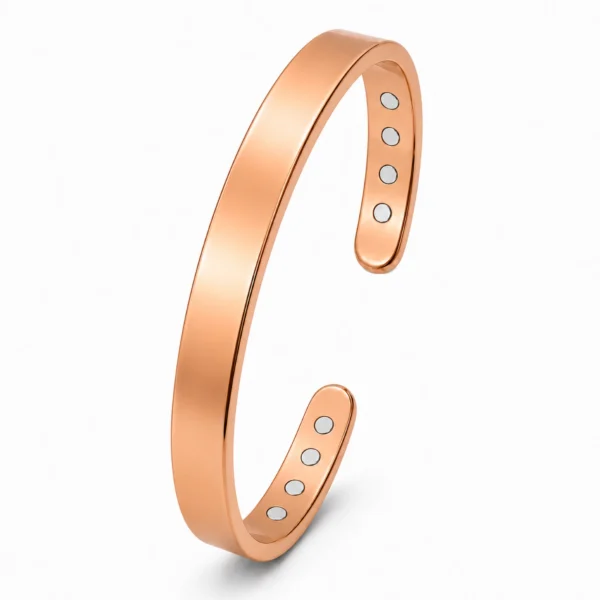
Prefer copper plus magnets? Bracero’s copper magnetic bracelet does exactly that. Same 99.99% solid copper, eight magnets set into the open ends, adjusts from 15 to 21.5 cm with no tools. Comes in at ₹480.
Side Effects Worth Knowing
Green skin under the bracelet is normal. Copper oxide from skin contact. Washes off, fades on its own if you stop wearing it. Nothing to worry about.
Actual irritation is a different thing. Seven of the 70 participants in the PMC trial reported skin irritation specifically from the copper bracelet. Itching and redness. Not just discolouration. If that’s what you’re getting, take it off and check whether it’s a copper sensitivity.
Pacemaker or implanted cardiac device: get medical advice before wearing anything with magnets. A plain copper bracelet with no magnets doesn’t carry that specific risk.
And plainly: a copper bracelet doesn’t replace arthritis treatment. Active arthritis limiting your daily movement is a conversation for a doctor, not a bracelet listing.
Final Thoughts
Clinical evidence against? Yes, broadly. The trial found nothing that separated from placebo in any meaningful way. That’s the honest read on it.
But it’s not quite the full picture for everyone who wears one. A placebo response is still a real response for whoever’s having it. The Ayurvedic tradition around copper kadas carries its own kind of weight that sits outside the pharmacology argument entirely. And for some people, wearing one just makes the morning routine feel slightly more manageable, for reasons they can’t fully explain and don’t particularly need to.
Four weeks. Daily. Skin contact. That’s the minimum for a real answer. After that you’ll know.
How long before a copper bracelet helps with arthritis?
Usually the first one to two weeks, if anything shows up at all. Don’t judge it before four weeks though. A few hours here and there doesn’t count as a real trial.
Why does skin turn green under a copper bracelet?
Copper touching sweat and skin oils creates copper oxide. That’s the green. Completely harmless, wipes off easily, and actually means the bracelet is making proper skin contact. Fades within days of removing it.
Does copper from a bracelet actually absorb into skin?
Small amounts do transfer, which is what causes the green staining. Whether that amount produces any real effect is where the science gets uncertain. The 2013 PMC trial didn’t find a meaningful result from copper bracelet wear.
Is it safe to wear a copper bracelet every day?
For most people, yes. About one in ten participants in the PMC study reported irritation specifically from copper. Itching or redness rather than just green tinting. Take it off, see if it settles. Pacemaker? Check with a doctor before using the magnetic copper version.
Pure copper or copper magnetic bracelet for arthritis, which is better?
Different premises entirely. Pure copper kadas go back to Ayurvedic tradition, relying on copper skin contact. Magnetic copper versions add a separate magnet claim on top. Research doesn’t clearly parse the two apart, so it mostly comes down to which rationale makes more sense to you personally.
Which wrist should I wear a copper bracelet on for arthritis?
Not much evidence either way. Most people wear it where the stiffness is worse. Both sides affected? The non-dominant wrist is generally easier to keep on all day without constantly catching it on things.
Decided to try one? Bracero’s copper bracelet collection has both pure copper kadas and copper magnetic styles, so you can pick based on what makes more sense for your situation.